Schedule 1 is the kind of instant Steam hit that was only ever going to come from a complete rando
Published: January 01, 0001
More than two weeks after launch, Schedule 1 is still the top-selling paid Steam game. That means that the open world drug-dealing RPG is raking in more dough than on Steam, which released only five days riches777 earlier. Its active player count is often over 300,000 (with a peak of over 450k), suggesting the $20 early access game has sold at least a million copies (or maybe a lot more).
Besides the music and some graffiti art, Schedule 1 was entirely made by one guy in Australia named Tyler.

But let's imagine they tried…
I firmly believe a large group of people could not have made Schedule 1. It's too strange, specific, and well…about drugs.
That'd be the first obstacle, right? If an established studio was hearing a pitch for an open world RPG about building a drug empire one baggie of kush at a time, at least one person would raise their hand and ask a question that budding solo devs never ask themselves: "Can we even sell that on a PlayStation?"
Maybe? Obviously there are lots of console games with drugs in them, but you won't find dozens of dealing sims on g2g1bet the PlayStation Store like you can in the lawless lands of Steam. A quick search of the Xbox store rang up a handful (including the first Drug Dealing Simulator from Movie Games SA, the ), which was a little surprising. Even if you make it to the store, could you count on promotion from the platform? Nintendo would be a non-starter.
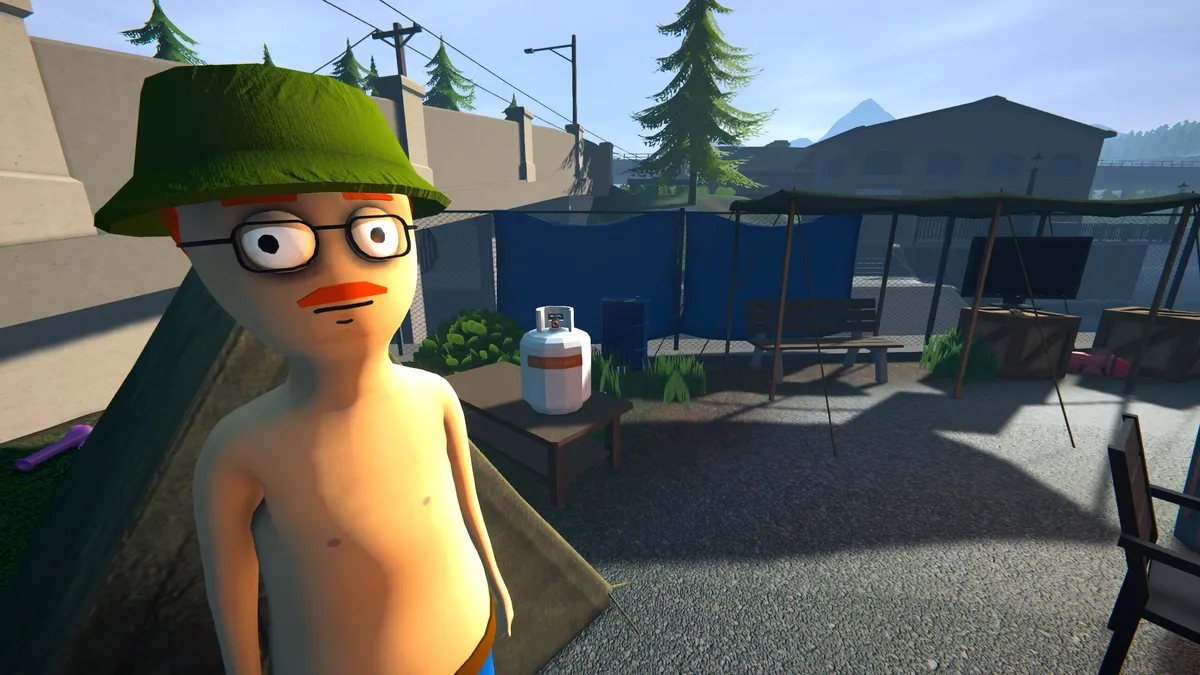
Assuming our theoretical big studio take on Schedule 1 got the green light from a major publisher, the first thing it'd do is fail to capture its charm by making everything look too real. A miles-wide city, globally-illuminated grow lights, windy grass—there's just no chance in hell that a fully-staffed art department would land on Schedule 1's lanky, goofball-shaped humans whose simple features make faces memorable and whose gigantic eyes reveal how baked they are from a block away.
The EAs, Ubisofts, and Activisions of the world could not resist producing crystal meth textures so impressive that half of Steam's users can barely render them. I know that'd kill my interest pretty quick.
Schedule 1's textureless world and cast who'd fit right into an Adult Swim animation was likely the practical consideration of a solo dev who is primarily a programmer, not an artist, but the game's softness lends a needed levity to an edgy premise. Without it, you get those Drug Dealer Simulator games I mentioned before, which look so generic that my eyes scroll right past them.

Focused to death
The next thing a big studio would do is put its Schedule 1 in front of focus groups until everything unique about it was axed. All of those where you buy seeds, plant them, water them, harvest them, individually package them, peddle them, and then eventually appreciate reaching the point where employees can automate some of it? Fat chance. Someone with a spreadsheet would decide that's too complicated and streamline it until it was as easy as growing wheat in Minecraft.
That's not to say that big developers never do anything innovative or unexpected, but more often than not we see them taking inspiration from weird little indie games rather than the other way around, and when they do, they often sand down the edges.
Starfield, for instance, that would've made players consider atmospheric conditions, radiation levels, and what spacesuit you put on before stepping foot on an unexplored planet. Focus tests said that was too difficult, so instead, we got an oxygen meter that's just a glorified stamina bar.

By the same token, a bigger studio wouldn't let its Schedule 1 be so perfectly imperfect. The real Schedule 1 is dense with systems that you rarely see attempted all in the same game, no matter the team size: a clockwork world full of named citizens with schedules, dynamic employee programming, melee combat, guns, interior decorating, skateboarding, time management, stealth, pickpocketing, smuggling, driving, real estate, bartering, gambling.
I honestly don't think a bigger studio would have the guts to let some systems be sort of bad for a while
I'd describe around half of those systems as "rough to functional" in their early access state, but they're good enough to coalesce into one majorly impressive simulation. I honestly don't think a bigger studio would have the guts to let some systems be sort of bad for a while, even if it meant the whole game was richer for it. It'd more likely choose a smaller number of things to do well.
Paradox came close to putting out a super ambitious, likely quite janky early access life sim last year, but it and abandoned years of work because it didn't think the game could cut it. The struggling publisher might've been right, but we'll never know, and an indie team, if it could pursue such a big project, would've just released the thing and found out.

The other thing a big studio can't replicate isn't the big studio's fault: PC gamers love to give small devs a chance. Two decades of Steam browsing have trained us to recognize potential in games that have room to grow, and Valve's formalized early access program helps calibrate expectations.
No matter what version of Schedule 1 a billion-dollar publisher could put out, its involvement would immediately take grace off the table. We love to feel like we're getting in on the ground floor of the next Balatro, REPO, or BattleBit Remastered.
That's because we know that the biggest games of the year are the ones you won't find on any calendar or website's radar. The year in gaming, and especially the year in PC gaming, is paved in that come out of nowhere, and 2025 has already produced an all-timer weirdo in Schedule 1.
Recommended Reading
There's no better feeling than being able to dress up your videogame character like a little Barbie doll and parade it around a fake world, forming some strange sense of attachment to [[link]] a bundle of pixe...
Personal Pick (Image credit: Future)In addition to our main Game of the Year Awards [[link]] 2024, each member of the PC Gamer team is shining a spotlight on a game they loved this year. We'll post new pers...
I didn't realise a criminal empire would lead to so many early mornings. [[link]] Yet, here I am, waking up at 7 am every morning and skateboarding around my regulars, making sure they've got enough stuff to g...
Comments (3)
The progressive jackpots are thrilling, and it's exciting to watch the jackpot amounts grow as more players spin the reels. I hope they add even more jackpot slots because it adds a lot of excitement to the gameplay. I love the overall aesthetic of the platform. The animations, visual effects, and sound design make the gaming experience more dynamic and immersive. It's one of the reasons I keep coming back.
Customer support has been outstanding whenever I had any issues. They respond quickly and professionally, ensuring that any concerns with deposits, withdrawals, or gameplay are addressed immediately, which makes me trust the platform more. The payout process is generally smooth and reliable, though occasionally it takes longer than expected. Overall, I feel confident that my winnings are safe and will be credited properly. I appreciate the themed slot games, especially those based on movies and TV shows. They make the gaming experience more engaging and immersive. The combination of storyline, visuals, and bonus features makes each game feel unique.
The mobile interface is smooth and intuitive. I can play all my favorite slots on the go without experiencing any lag or glitches. The design is responsive and user-friendly, which makes gaming on my phone just as enjoyable as on my computer. The variety of games is excellent, including table games like blackjack, roulette, and baccarat, in addition to slots. This keeps the platform interesting and allows me to switch games depending on my mood.